

Explore the Sprint Learning Tracks
-
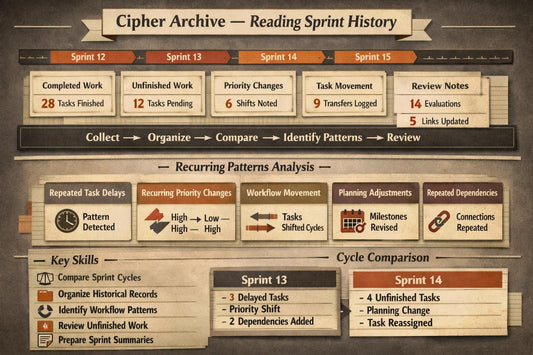
Cipher Archive
Regular price €218,00 EURRegular price -
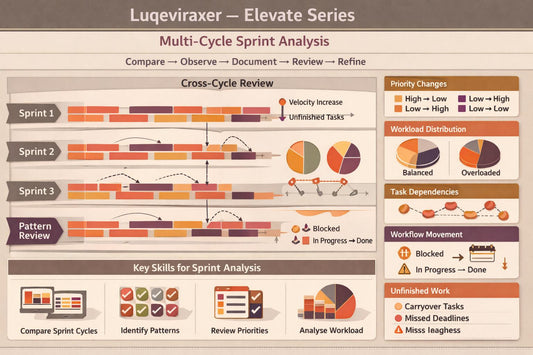
Elevate Series
Regular price €288,00 EURRegular price -
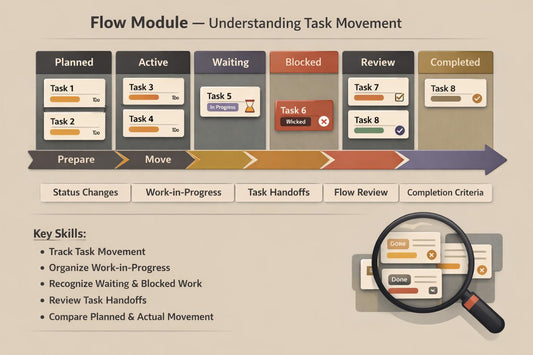
Flow Module
Regular price €127,00 EURRegular price -
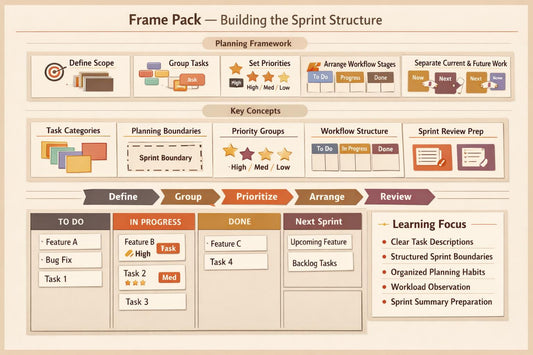
Frame Pack
Regular price €65,00 EURRegular price -
-
Lattice Library
Regular price €205,00 EURRegular price -
Luma Guide
Regular price €172,00 EURRegular price -
Nexus Series
Regular price €252,00 EURRegular price





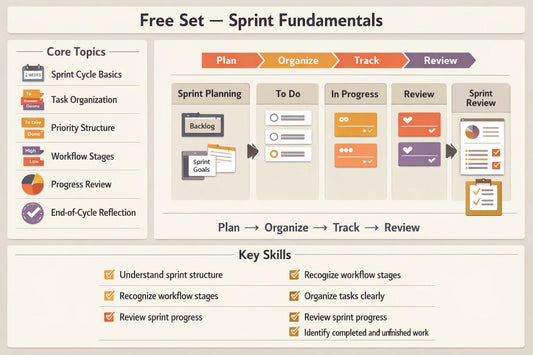

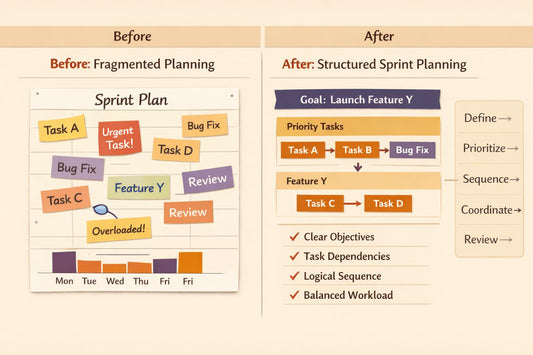

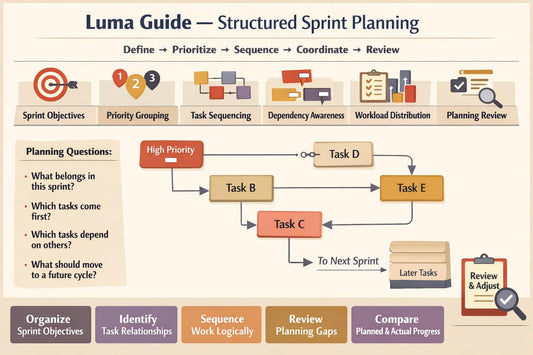

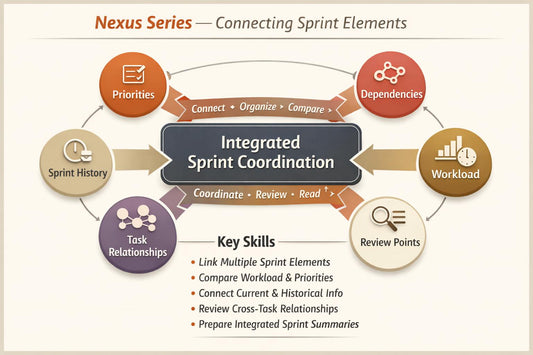
Built Around the Rhythm of Organized Work
Available on all devices



30-days refund guarantee
The People Behind the Learning Structure
-

Joren Vale
Workflow Operations Analyst
Joren studies how tasks move through sprint workflows and where work tends to slow down. He reviews status changes, task handoffs, and work-in-progress patterns across repeated cycles. His findings are used to support clearer workflow structures and more consistent review discussions.
-

Tahlia Monroe
Sprint Review Specialist
Tahlia focuses on end-of-cycle reviews, unfinished work, priority changes, and recurring workflow observations. She compares sprint records to identify useful patterns across multiple planning cycles. Her role includes preparing structured review materials that help teams examine previous work and future planning needs.
-

Breccan Hale
Task Flow Coordinator
Breccan focuses on task movement, blocked work, dependencies, and workflow visibility inside sprint systems. He organizes task relationships and reviews how items progress through different stages. His role also involves preparing structured summaries that make sprint activity easier to examine.


Begin With a Free Sprint Resource
More Than a List of Sprint Terms
-

Clear Structure
Lessons follow an organized sequence that connects sprint planning, task movement, priorities, dependencies, and review concepts in a logical learning path.
-

Practical Focus
Course materials use realistic workflow examples and structured exercises to help learners examine how sprint management concepts relate to everyday planning situations.
-

Flexible Learning
Luqeviraxer downloadable materials allow learners to study according to their own schedule and revisit individual topics whenever additional review is useful.
-

Connected Thinking
The course explains relationships between tasks, priorities, dependencies, and sprint reviews so learners can understand the wider planning structure.


Notes From the Learning Journey
-

Elara Bennett
Elara had worked with recurring task cycles before but wanted a clearer explanation of dependencies, workflow stages, and sprint review methods. She found the structured examples and downloadable format useful because they made it easier to revisit specific topics while studying offline.
“I liked that the course explained the logic behind the workflow rather than only listing terms.”
-

Camden Brooks
Camden started with experience in task coordination but wanted a more organized way to study sprint planning and multi-cycle review. He found the clear section layout and comparison-based explanations useful for understanding how current sprint information can connect with earlier planning records.
“The course gave me a more structured way to think about planning, review, and recurring workflow patterns.”


Structure for Every Sprint


